
 By Nexrel
 Market 1914 penny value depends on production numbers and the condition of metal surfaces.
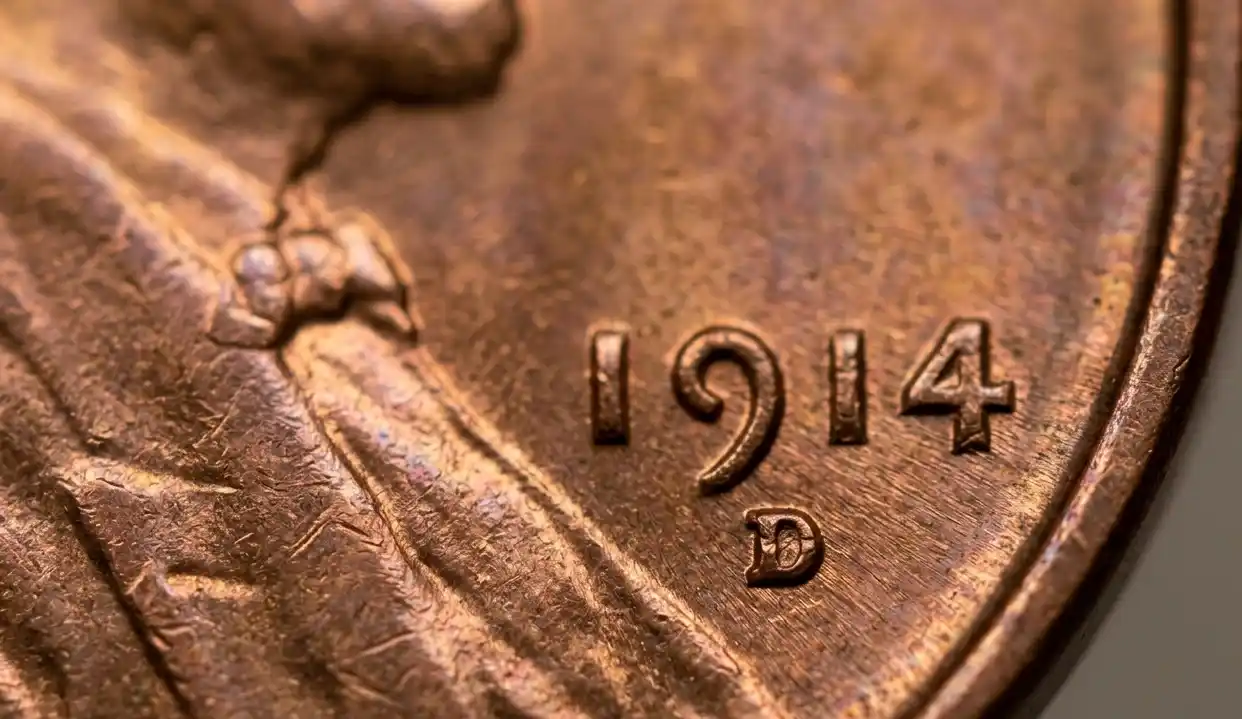
This specific minting period shows a massive price gap between specimens from different facilities.
US Mint production standards in 1914 strictly regulated the physical traits of every unit.
Deviations from these parameters indicate a counterfeit or extreme wear.
| Parameter | Value |
| Mass | 3.11 grams |
| Diameter | 19.05 millimeters |
| Material | Copper Alloy |
| Edge Type | Plain |
| Designer | Victor David Brenner |
Using scales accurate to 0.01 grams helps identify cast copies.
Mintage Statistics by Mint Facility
Three branches handled the striking of Lincoln cents throughout 1914.
Placement of the mint mark under the date determines the rarity of the object.
- Philadelphia without mark → 75,238,432 units
- Denver with D mark → 1,193,000 units
- San Francisco with S mark → 4,137,000 units
Denver production represents less than 2% of the total yearly output.
Low numbers of surviving 1914-D specimens in high grades create a shortage on auction platforms.
Value Analysis of 1914-D
This coin remains a key date in the twentieth-century Lincoln cent series.
Pricing relies on the Sheldon Grading Scale.
| Condition | 2026 Price |
| G4 Good | $185 |
| F12 Fine | $340 |
| VF20 Very Fine | $510 |
| XF40 Extremely Fine | $825 |
| AU50 About Uncirculated | $1,650 |
| MS63 Brown | $3,800 |
| MS65 Red | $28,500 |
Annual value growth for the MS63 grade stays at 5.5% during stable market periods.
Red color specimens show price volatility up to 12% depending on large investor activity.
Reasons for high 1914-D costs: Low starting mintage → High buyer competition Heavy circulation in the economy → Lack of uncirculated stockpiles Massive coin cleaning in the past → Reduction of original surfaces High demand from set builders → Constant capital inflow
1914-S Issue Specifics
San Francisco Mint produced three times as many units compared to Denver.
Value of these objects is significantly lower but exceeds face value by hundreds of times.
Price table for 1914-S:
- VG8 → $22
- VF20 → $48
- XF40 → $75
- MS63 Brown → $290
- MS65 Red → $1,850
Price drops of 15% occur when dark spots appear on the Lincoln portrait.
Investment appeal for 1914-S is rated as moderate.
Philadelphia No Mint Mark Strike
Mass production in Philadelphia makes these coins accessible to most market participants.
Price in common condition often stays within a few dollars.
Price dynamics for 1914 No Mint Mark: G4 → $0.50 VF20 → $2.50 MS63 Brown → $45 MS65 Red → $210
Record price for a 1914 Philadelphia specimen in MS67 Red grade reached $12,600.
Main value lies in retaining the original copper luster.
Authentication Process for 1914-D
High prices encourage the creation of fakes by altering dates or adding marks.
Verification methods include studying the metal microstructure and using the coin identifier app free.
- Analysis of the digit 4 shape. Originals have a specific slant.
- Checking the gap between digits 1 and 9. Wide spacing indicates a fake.
- Mark D inspection. The mark must have sharp edges without soldering traces.
- Weight control. Deviation over 0.1 grams is a critical sign.
Using specialized analysis confirms the metal alloy composition.
Foreign metals present → Sign of a modern copy.
Surface Color Classification
Color is a defining factor in pricing 1914 copper coins.
Professional services use three designations.
Brown. Surfaces are fully oxidized, losing natural shine. Red-Brown. Retaining between 5% and 95% of original red color. Red. Retaining more than 95% of bright copper color.
Moving from Red-Brown to Red increases coin price by 300-500%.
Storage in plastic holders prevents further oxidation.
Impact of Corrosion on Liquidity
Copper reacts actively with the environment.
Appearance of microscopic corrosion spots irreversibly lowers the grade.
Damage types:
- Green patina → Total loss of collector value
- Dark carbon spots → 40% price reduction
- Abrasive cleaning → Denial of numeric grading
Restoring surfaces using chemicals removes the coin from investment circulation.
Auction Records and 2026 Market Trends
Sales on major platforms set maximum price levels.
Recent trade statistics show steady demand for rare positions.
Heritage Auction 2025: 1914-D MS66 Red sold for $152,000. Stack’s Bowers Auction 2026: 1914-S MS65 Red sold for $4,200. Private sales for AU58 grade: stable level at $2,100.
Ten-year price change percentage: 1914-D → +45% 1914-S → +18% 1914 P → +12%
Investors prefer placing funds in coins with verified provenance.
Die Condition and Strike Quality
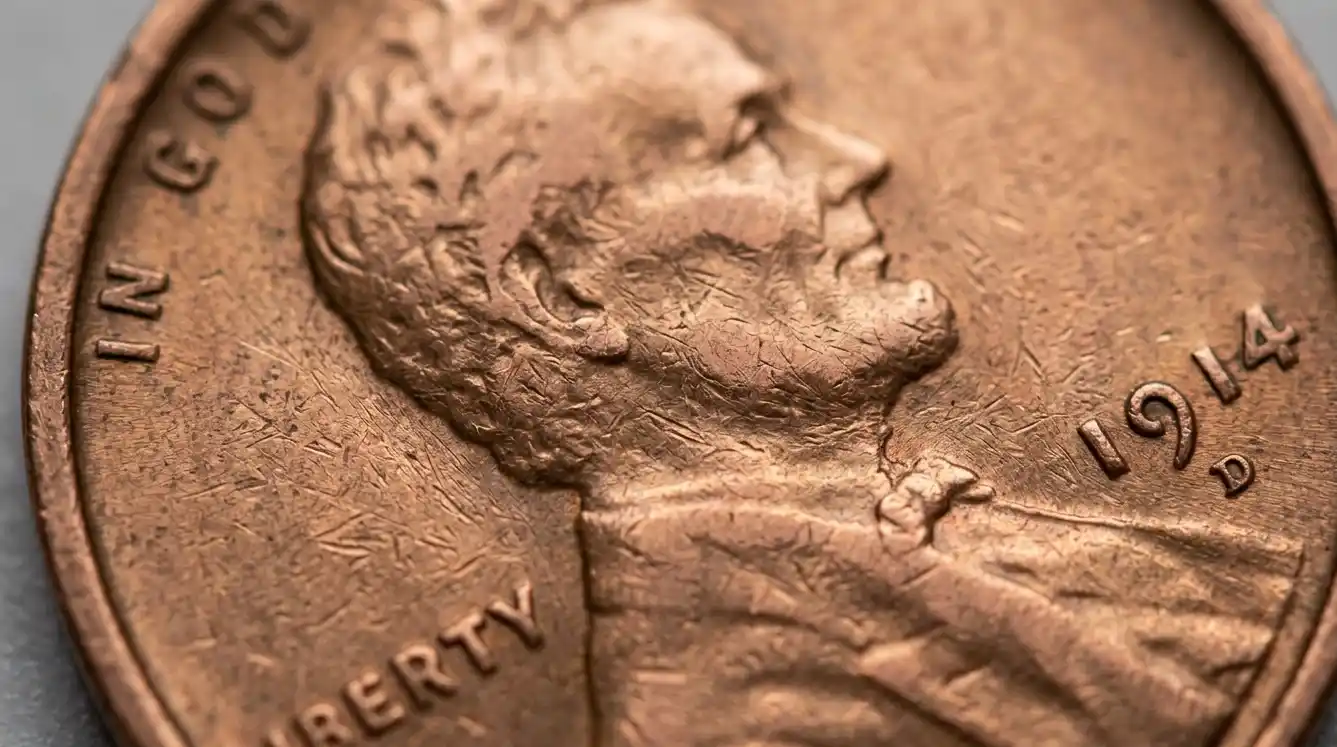
Equipment wear in 1914 affected the sharpness of small details.
Weak strikes result in lost detail in Lincoln’s hair.
Signs of a quality strike:
- Sharp wheat ear lines on the reverse
- Distinguishable hair strands above the ear
- No distortion in Liberty lettering
Specimens with full detail strikes cost 20% more than average market values.
Preservation and Conservation
Maintaining a stable environment is a mandatory condition for owning a 1914 coin.
Temperature swings cause metal expansion and oxide layer damage.
Safety recommendations: Using humidity-controlled safes → Humidity level below 30% Avoiding PVC albums → Preventing chemical burns Wearing cotton gloves during inspection → Eliminating skin oil contact
Breaking storage rules leads to a 2% value loss annually due to surface degradation.
Grading Companies and Their Role
Certification by PCGS or NGC is the standard for coins of this level.
Lack of a holder makes buying a 1914-D a high-risk operation.
Certification benefits: Authenticity guarantee → 60% liquidity increase Exact color determination → Fixing the price category Physical damage protection → Preserving condition for decades
Coins without certificates trade at a 30% discount from market price.
Die Varieties and Errors
No major minting errors affecting millions of units were recorded in 1914.
Small variations exist, drawing interest from specialists.
Variation types:
- Minor date doubling → $10 price premium
- Die cracks on the field → Negligible value impact
- 5% off-center strike → Rare occurrence for this year
Searching for errors requires a coin identification.
Comparison with 1909-S VDB
People often compare the 1914-D with the more famous 1909 cent.
1914-D mintage is twice as high as the 1909-S VDB.
Availability comparison: 1909-S VDB → Large numbers of coins saved in high quality 1914-D → Near absence of coins in original bank rolls
This makes the 1914-D rarer in MS65 condition compared to the legendary 1909 issue.
Market deficit for Red 1914-D specimens is 40% higher.
Instructions for New Collectors
Acquiring a 1914 penny requires a systematic approach.
Mistakes during purchase lead to capital loss.
Transaction steps: Reviewing auction archives for the last 12 months. Verifying certificate numbers in the issuer database. Examining the coin edge for mounting marks from old jewelry. Comparing luster with reference samples of the same grade.
Buying a cleaned specimen is unacceptable for investment purposes.
Conclusion
The 1914 coin holds a unique spot in American numismatic history.
Combining historical weight and physical rarity ensures constant interest.
Long-term success factors:
- Steady inflow of new collectors
- Limited supply in top conditions
- Price transparency through digital registries
Owning a 1914-D in better-than-average condition is a mark of a professional portfolio.